

Editors note: This is fiction. The frameworks are real
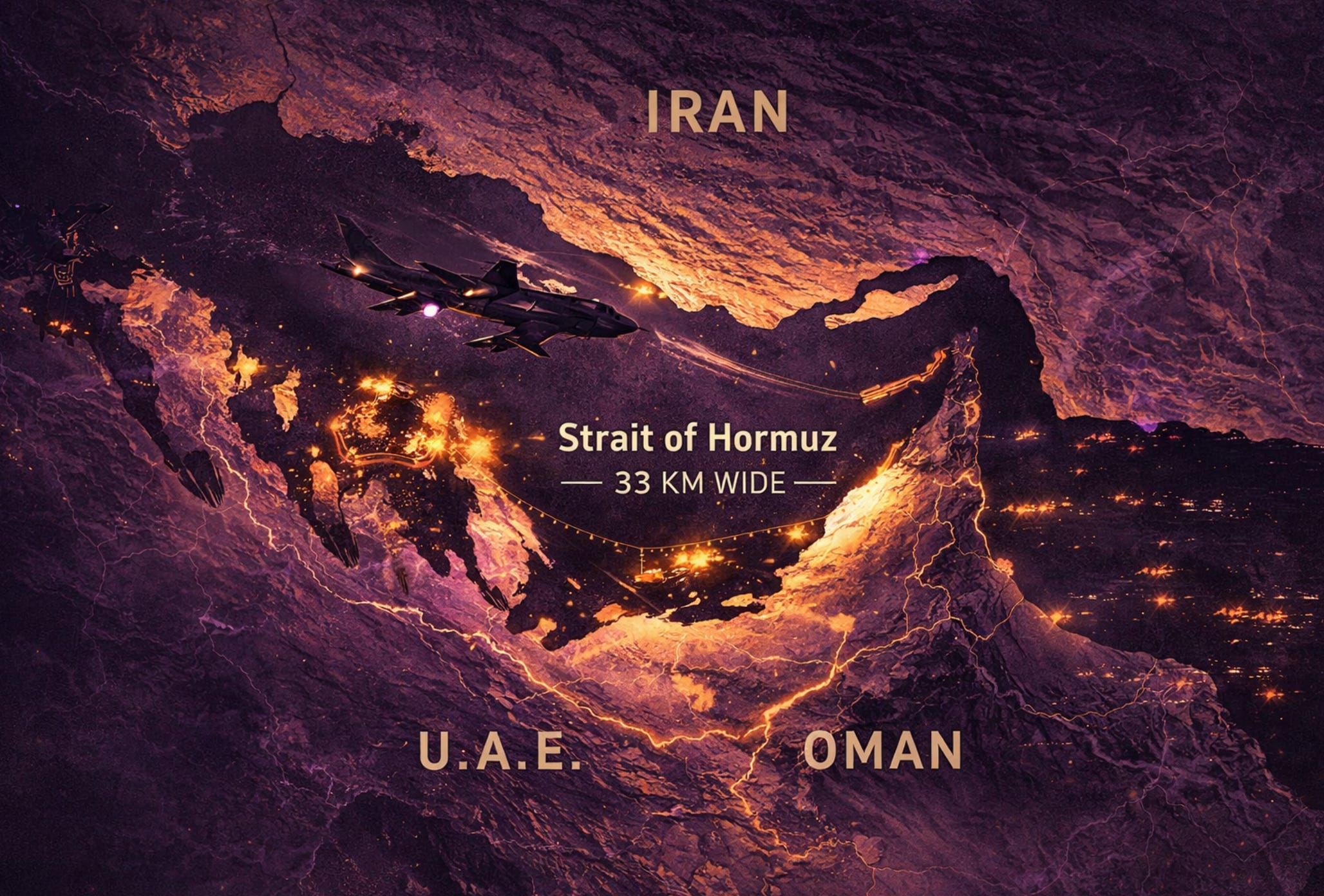
The most consequential weapon in the Iran conflict was never nuclear. It was geographic.
The Strait of Hormuz is 33 kilometres wide at its narrowest point. Twenty percent of the world’s oil passes through it every day. Iran does not need to close it. It needs Lloyd’s of London to believe it might.
The opening looks the way everyone expects. Cruise missiles flatten enrichment sites at Natanz, Isfahan, Fordow. Satellite imagery circulates within minutes. Cable news declares mission accomplished before the second wave has launched. But Iran’s nuclear programme was never a building. It was a network, dispersed and buried and duplicated across sites that Western intelligence mapped and sites it did not. The strikes destroy roughly 60% of visible infrastructure. Sounds decisive until you understand the remaining 40% was the portion Tehran expected to lose.
The side that plans for the punch absorbs it better than the side that throws it.
By day five, the Pentagon briefs “significant degradation.” Tehran briefs the programme is intact. Both are partially true. Neither side has a reason to stop. And then the real war begins, on the water.
Just before dawn, a swarm of cheap drones crosses low over the Gulf. Too small to terrify on radar. Too many to ignore. They hit compressors, loading gantries, a desalination intake. Nothing world-ending. Precision is expensive. Nuisance, repeated often enough, does almost the same job. Insurance markets did the rest. Three tankers turned around within ninety minutes of each other. None of them had been hit. All three feared they were about to be. Oil moved to $140, freight rates spiked, and in one trading room in Singapore a junior analyst said it plainly: “This is not a supply problem. This is a courage problem.”
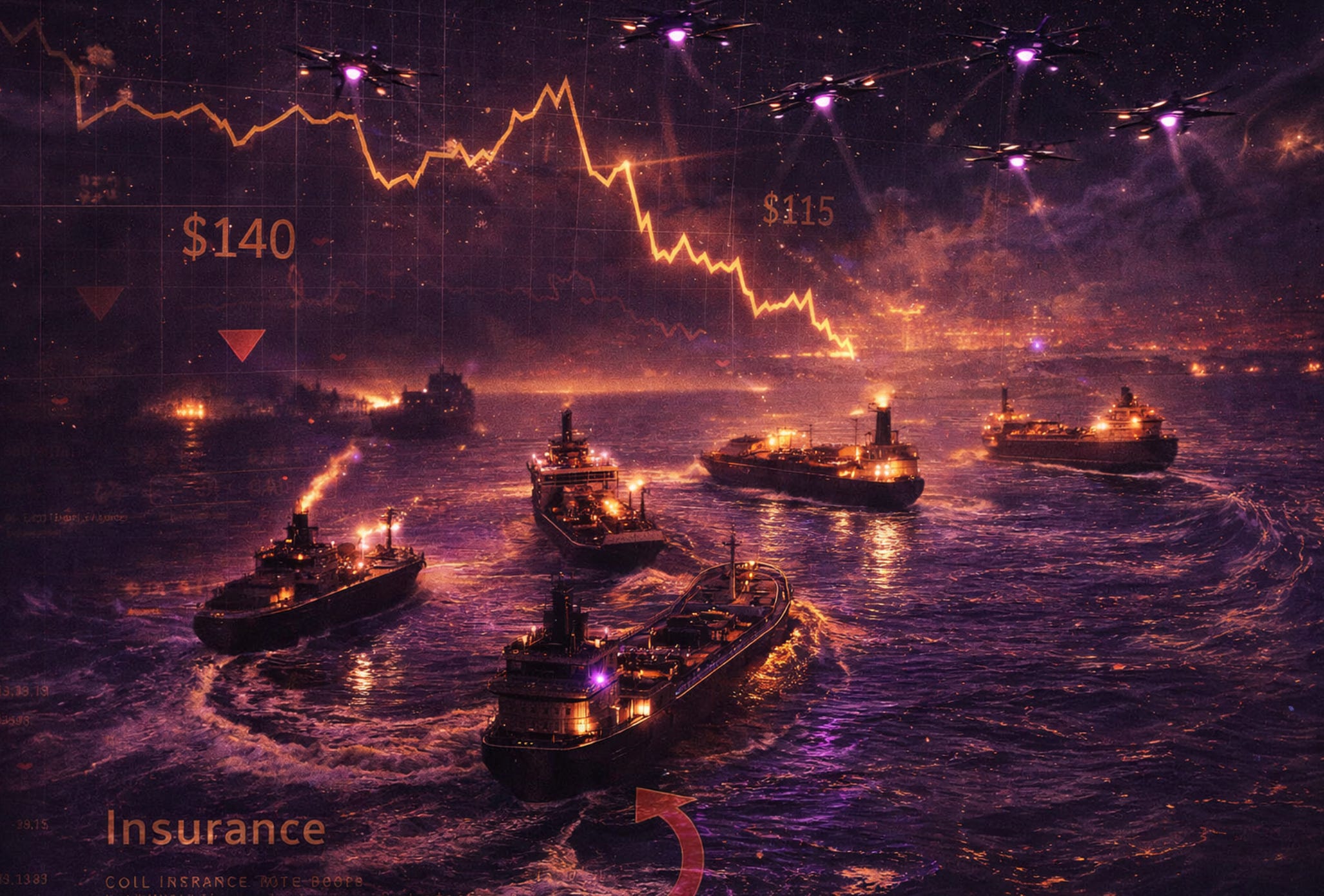
He was right. Modern systems do not always break when something is destroyed. Sometimes they break when enough people decide the crossing is no longer worth the risk.
The actor who controls the price of uncertainty has more leverage than the actor who controls territory.
Within the same fortnight, rockets hit US bases in Iraq. Houthi drones target Saudi oil infrastructure. Hezbollah fires a calibrated barrage into northern Israel, enough to force a response, not enough to trigger a ground invasion. Four theatres, none decisive on their own, all of them consuming diplomatic bandwidth, military assets, and political capital at once. In Dhaka, a minister began drafting food subsidies he could not afford. In Nairobi, a bakery owner crossed out tomorrow’s prices and wrote worse ones underneath.
The cost of a distributed problem is not the sum of its parts. It is the inability to prioritise.
Six weeks in, the conflict reaches a stalemate nobody wants to name.
In Tehran, a former lecturer named Arash stepped onto his roof and watched the city go dark in sections. Rolling blackouts. Fuel rationing. Half-working grids. Power had not collapsed. It had become local, which made it harder to see and harder to fix. Families ate dinner beside battery packs. The internet thinned to a trickle, then vanished. The state still had guns. It still had prisons. What it had lost was its monopoly on certainty. Everyone was improvising: the clerics, the Guard, the foreign powers, the street.
In Washington, the war room had its own shortage: sentences. The President wanted one he could live inside. No ground war. That line had held for six weeks. But language is a poor seawall. A Treasury official observed that markets could survive fear; what they hated was duration. Nobody at the table disagreed.
The resolution came from a quiet room in Muscat.
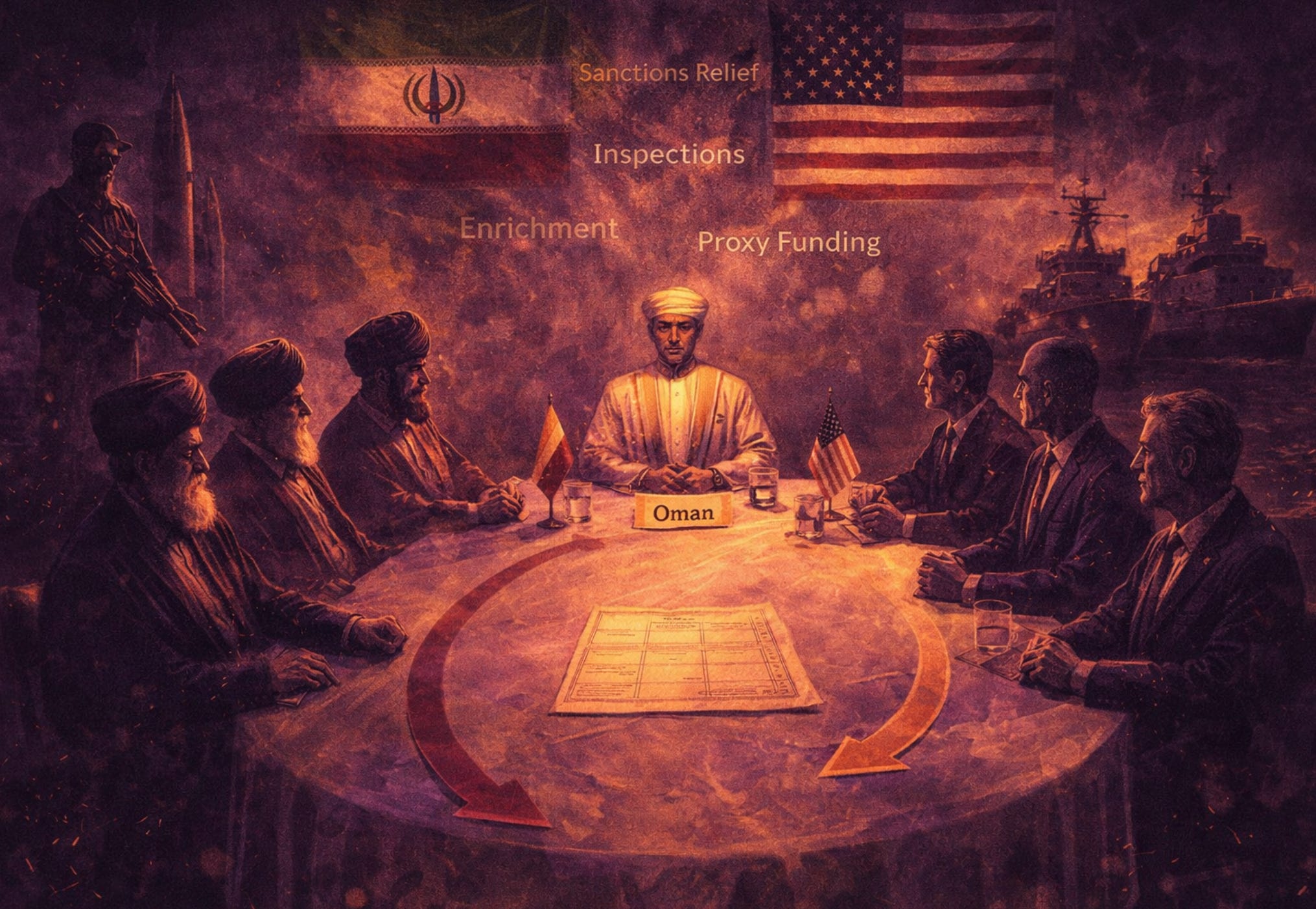
Oman, which has played this role for decades, carried the opening positions. Tehran’s ask: full sanctions relief on oil exports, a public commitment that regime change was not American policy, recognition of Iran’s right to enrich to 40%, and withdrawal of all new naval assets from the Gulf within 90 days. Washington’s ask: enrichment capped at 3.67% (the old JCPOA number), unlimited short-notice inspections of any site including military facilities, permanent dismantlement of the Fordow underground plant, and verifiable cessation of all proxy funding.
Both sides knew these were starting numbers. Neither could accept the other’s opening position. That is how negotiation works. The opening offer is not a proposal. It is a claim on the territory where the real conversation will happen.
The question was who would move first, and the answer, as in most negotiations, came down to time pressure. Washington was bleeding politically. Oil at $140 was a tax on every voter. A midterm election was eleven months away. Iran was bleeding economically, but the regime had decades of practice absorbing sanctions. It could wait. America’s clock was louder than Iran’s, and both sides knew it. Eighty per cent of concessions happen in the last 20% of available negotiating time. The side under more time pressure makes the bigger moves.
Over seven weeks of back-channel, the positions converged. The final settlement: enrichment capped at 20%, up from Washington’s ask of 3.67% but well below Iran’s demand for 40%. Inspections with 14-day notice on declared sites and 28-day notice on disputed sites, a compromise between unlimited access and the JCPOA’s delays. Fordow converted to a research facility, not dismantled but no longer enriching. Sanctions relief phased over 18 months, tied to verified compliance at each stage. No public statement on regime change, but a private letter through Oman. No naval withdrawal, but a drawdown to pre-conflict levels within six months.
Neither side got what it opened with. Both sides got enough to stop.
Three months after the first strike, the framework agreement was announced in Muscat. Hawks called it appeasement. Hardliners called it surrender. The publics in both countries barely registered it. A new crisis had already captured the headlines.
But the arithmetic held. The numbers balanced.
Wars end when both sides find a number they can live with. The number is never the one either side wanted.
The war began with cruise missiles over Natanz. It ended with a spreadsheet in Oman. Thirty-three kilometres of water decided more than thirty thousand tonnes of ordnance.
Frameworks
Find the chokepoint, not the target. The point of maximum leverage in any conflict, whether military or commercial or organisational, is rarely where the noise is loudest. It is the narrow passage everything else depends on. The Strait was worth more than every enrichment facility combined. In your world: what is the 33 kilometres that everything flows through?
Distributed problems defeat concentrated force. If someone can stretch you across four fronts simultaneously, your strength on any single front becomes irrelevant. The answer is not to fight harder everywhere. It is to refuse the frame and choose which front actually matters.
The side with the louder clock loses. Eighty per cent of concessions happen in the last 20% of available time. Washington had a midterm election. Iran had decades of practice waiting out sanctions. The side under more time pressure always makes the bigger concessions. In any negotiation, before you sit down, ask: whose clock is louder? If it is yours, either silence it or do not negotiate yet.
Get to the number faster. When both sides have proven they can hurt but cannot finish each other, the conversation will eventually become arithmetic. The people who cling longest to narrative and delay the numbers cause the most collateral damage. Reach for the spreadsheet before the speech.
The deal nobody celebrates is the deal that holds. If one side is delighted, the other is already planning to break it. The Muscat agreement left everyone mildly unhappy. Three years later, it was still standing.
This week I was going to publish the next framework in the regular sequence. Then I watched the news and realised the frameworks were already playing out in real time. So I wrote this instead.
Check out some of my other Frameworks on the Fast Frameworks Substack:
The Decision Framework: DECIDE
The Alpha Engine Framework for Venture & Angel Investing
Don’t Hire an Agency. Build a Memetic Engine - The memetic engine framework
Fast Frameworks AI Tools: Cortex
The Exponential AI Adoption Framework
Moltbook and the Entity AI Framework
May every sunset bring you peace!
Entity AI, swarms and the future of work (Asymmetric Podcast)
Fast Frameworks Podcast: Entity AI-Episode 8: Meaning, Mortality, and Machine Faith
Fast Frameworks Podcast: Entity AI - Episode 7: Living Inside the System
Fast Frameworks Podcast: Entity AI – Episode 5: The Self in the Age of Entity AI
Fast Frameworks Podcast: Entity AI – Episode 4: Risks, Rules & Revolutions
Fast Frameworks Podcast: Entity AI – Episode 3: The Builders and Their Blueprints
Fast Frameworks Podcast: Entity AI – Episode 2: The World of Entities
Fast Frameworks Podcast: Entity AI – Episode 1: The Age of Voices Has Begun
The Entity AI Framework [Part 1]
The Promotion Flywheel Framework
The Immortality Stack Framework
Frameworks for business growth
The AI implementation pyramid framework for business
A New Year Wish: eBook with consolidated Frameworks for Fulfilment
AI Giveaways Series Part 4: Meet Your AI Lawyer. Draft a contract in under a minute.
AI Giveaways Series Part 3: Create Sophisticated Presentations in Under 2 Minutes
AI Giveaways Series Part 2: Create Compelling Visuals from Text in 30 Seconds
AI Giveaways Series Part 1: Build a Website for Free in 90 Seconds
Business organisation frameworks
The delayed gratification framework for intelligent investing
The Fast Frameworks eBook+ Podcast: High-Impact Negotiation Frameworks Part 2-5
The Fast Frameworks eBook+ Podcast: High-Impact Negotiation Frameworks Part 1
Fast Frameworks: A.I. Tools - NotebookLM
The triple filter speech framework
High-Impact Negotiation Frameworks: 5/5 - pressure and unethical tactics
High-impact negotiation frameworks 4/5 - end-stage tactics
High-impact negotiation frameworks 3/5 - middle-stage tactics
High-impact negotiation frameworks 2/5 - early-stage tactics
High-impact negotiation frameworks 1/5 - Negotiating principles
Milestone 53 - reflections on completing 66% of the journey
The exponential growth framework
Fast Frameworks: A.I. Tools - Chatbots
Video: A.I. Frameworks by Aditya Sehgal
The job satisfaction framework
Fast Frameworks - A.I. Tools - Suno.AI
The Set Point Framework for Habit Change
The Plants Vs Buildings Framework
Spatial computing - a game changer with the Vision Pro
The ‘magic’ Framework for unfair advantage